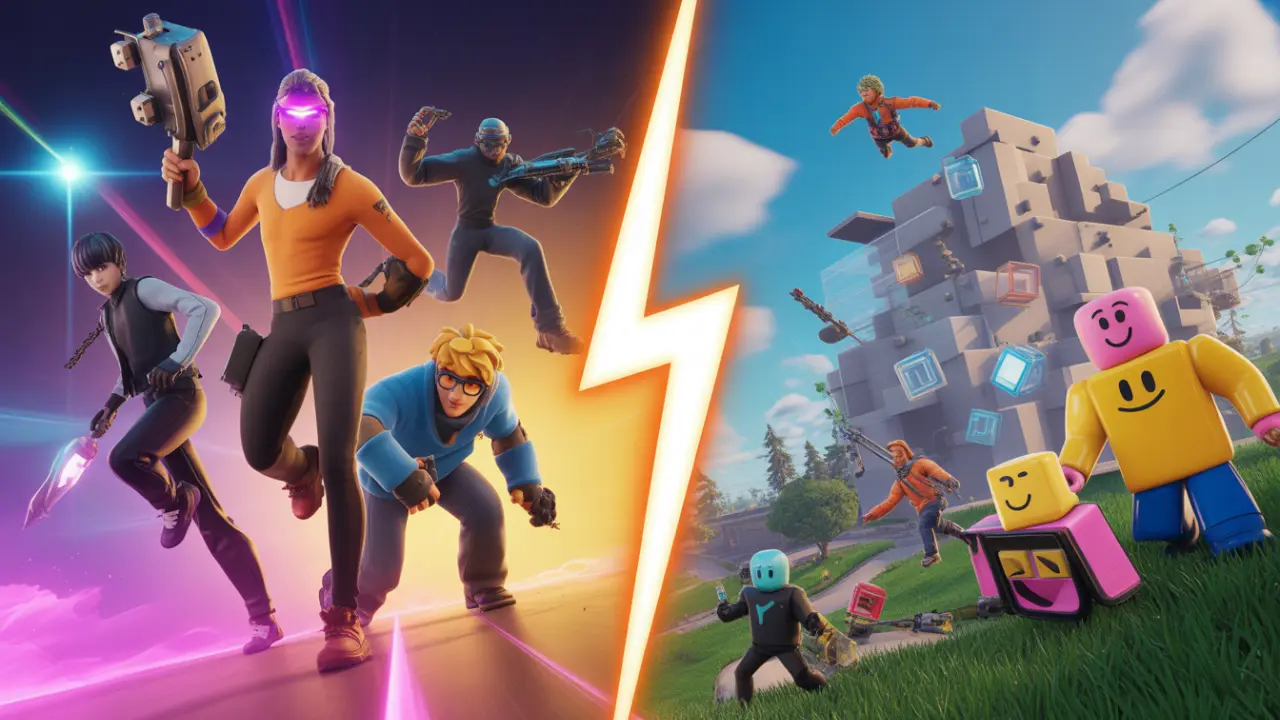
I'll share my perspective on teenage preferences and what the data and trends reveal. I'll examine streaming, playtime, and community engagement; analyze the virtual economy with Robux and V-Bucks and how it changes choices; discuss safety, moderation, and parental controls; and show how the cultural influence of each game affects young people. When I ask "Roblox vs Fortnite: Which dominates among young people?", I aim to answer with metrics and examples, not a ready-made answer.
My popularity rating: Roblox vs Fortnite: Which one dominates among young people?
I see Roblox as a giant of creativity. Many young people join to create worlds, play minigames, and socialize. For young children and pre-teens, Roblox functions as a digital plaza: it runs on mobile phones—and this helps when the device is basic, so it's worth checking recommendations like the list of... best cell phones for gamers — It's free and has new content all the time, which keeps your attention for hours. In Brazil, local growth and community adaptations deserve attention (Roblox in Brazil).
On the other hand, Fortnite shines in competition and spectacle. Among teenagers, skins, tournaments, and live events (shows, collaborations) keep the game in the spotlight. The fast-paced gameplay and competitive scene attract those seeking excitement and status among friends—and map changes and removed events also influence nostalgia and engagement.Iconic locations removed from Fortnite).
Ultimately, popularity depends on what you measure: number of players, time played, social media presence, or cultural influence. When I think about "Roblox vs Fortnite: Which dominates among young people?", I answer that it depends on the age group and the objective — creation or competition.
What I see regarding young people's preference for games and their popularity among teenagers.
Young people's choices come down to two things: community and access. If their friends are playing a game, they tend to follow suit. Free platforms that run on mobile devices have an advantage among those who don't own a console. Parental perception also plays a role: games with less direct violence tend to be more acceptable, increasing the presence of Roblox (1-to-2-4-4-5 games) at certain ages.

- Factors that influence preference:
- Community (where are the friends)
- Access (mobile vs console/PC)
- User-generated content (strongest on Roblox) — see examples of viral headlines at viral games from Roblox
- Competition and esports (Fortnite's strength)
What I observe in streaming and content trends that amplify Roblox vs Fortnite
In streaming, Fortnite dominates large broadcasts with pro players and live events; viral clips and commentators transform matches into a spectacle. Meanwhile, Roblox grows through smaller creators: roleplays, challenges, and series that captivate audiences through episodes. Streaming boosts Fortnite through spectacle and Roblox through volume and variety of content. To understand the audience, it's useful to look at who the biggest influencers and platforms are—for example, lists like... the biggest streamers on Twitch They help map reach — and creators use production tools such as apps for recording your screen on your phone.
How do I interpret research data on who dominates young people?
The data varies by region, age, and metric. Some research indicates more active users on Roblox among children; others show more searches and social engagement on Fortnite among teenagers. I interpret these numbers as complementary: no title has absolute dominance—it changes depending on the age group, platform, and type of interaction measured.
How do I compare daily playtime and engagement between Roblox vs Fortnite?
I start by looking at the average daily time per player: hours per day, sessions per day, and average session duration. In Roblox, many young people spend more time because they jump between experiences; in Fortnite, the time is more concentrated on matches and live events.
Then I focus on retention — day 1, day 7, and day 30. Roblox creates habits through constant updates and its internal social network; Fortnite holds people's attention with seasons and events that generate peaks. I correlate engagement with the reason for playing: creating, socializing, or competing. When analyzing "Roblox vs Fortnite: Which dominates among young people?", I use retention curves to understand the type of engagement.
What I analyze regarding daily playtime and player retention.
- I separated players by age group and platform: younger players tend to prefer short, social experiences (Roblox); teenagers prefer intense sessions (Fortnite).
- Note regarding updates and events: frequent updates increase immediate returns; large events create spikes, but don't always keep the player engaged on a daily basis.
- Social cues: invitations, in-game parties, and popular creators are good indicators of retention.
What I notice about the virtual economy and in-game purchases: Robux and V-Bucks
Robux functions as a currency for expression and creation: purchases of clothing, builds, and items show identity; creators receive a share of the economy, which encourages new content. V-Bucks focuses on rarity, battle passes, and temporary events—an emphasis on status and seasonal goals. In short, Robux focuses on social expression and creation; V-Bucks on status, competition, and exclusive releases.
If you want to understand how players typically obtain these coins, there are practical articles on ways to get Robux and skins, as well as on V-Bucks: How to get Robux and free skins e How to get free V-Bucks.
How I analyze the influence of the virtual economy on the preferences of young people.
The virtual economy shapes tastes: some young people spend on social customization, others on rare skins. Real money, gifts from parents, or in-game earnings greatly influence behavior. In many groups, the right item becomes social currency and determines who you play with.
Why I focus on safety, communities, and cultural influence in the Roblox vs Fortnite duel.
Safety is paramount because many parents worry and young people are exposed. When I think about “Roblox vs Fortnite: Which dominates among young people?”, I don't just look at downloads; I look at who is safe while playing. The quality of the community also matters — it's where friendships and conflicts are born — and cultural influence shows how games shape music, slang, and behavior.
What I consider to be the safety factors for minors in games: moderation, privacy, and parental controls.
I look at moderation: speed of response to reports and effectiveness in removing inappropriate content. I evaluate privacy and parental controls: chat limits, content blocking, and options to disable purchases. Simple measures that parents can use make a big difference—for example, Roblox has tools like voice chat that require configuration, so it's helpful to know. How to activate voice chat on Roblox safely.
- Points I check: active moderation, chat controls, age requirements, purchase options, data policies.
In Roblox I see collective creation: teenagers build worlds, join groups, and learn programming through play—this encourages collaboration, but can also generate closed groups with unclear rules. Many of these projects emerge in popular genres such as obbies, role-playing games, and titles like... The most fun games on Roblox or even horror experiences. In Fortnite, interaction is centered around matches and global events: competition, viral dances, and major influencers create rapid and intense trends.
| Aspect | Roblox | Fortnite |
|---|---|---|
| Type of interaction | Creation and roleplay | Competitions and events |
| Influence | Small and lasting communities | Massive and rapid trends |
| Social risk | Closed groups, variable moderation. | Pressure to perform and exposure to viewers |
How do I view the impact of the cultural influence of games on young gamers?
Games become a megaphone for ideas and style. A gesture in Fortnite can become a meme in days; an experience in Roblox can teach a child how to create games. This influence blends entertainment with learning and identity.
Conclusion
There is no clear winner in “Roblox vs Fortnite: Which Dominates Among Young People?”. Roblox reigns supreme in creation, socialization, and variety; Fortnite shines in competition, spectacle, and status. Each appeals to a distinct audience based on age group, platform, and what the young person is looking for—to play or to compete.
The metrics that matter are: playtime, retention, virtual economy, safety, and community. These elements say more than just download numbers. Roblox is the neighborhood square where everyone meets; Fortnite is the stage where the show happens.
If I had to give one practical piece of advice: observe who your child plays with, check parental controls and moderation, and don't underestimate the power of the virtual economy in young people's decisions. Small measures can make a big difference in the experience and safety. To better understand practical cases, popular titles, and quick start guides, there are materials for beginners and specific guides such as... Fortnite beginners, tutorials about Blox Fruits and lists of codes and content for games within Roblox.