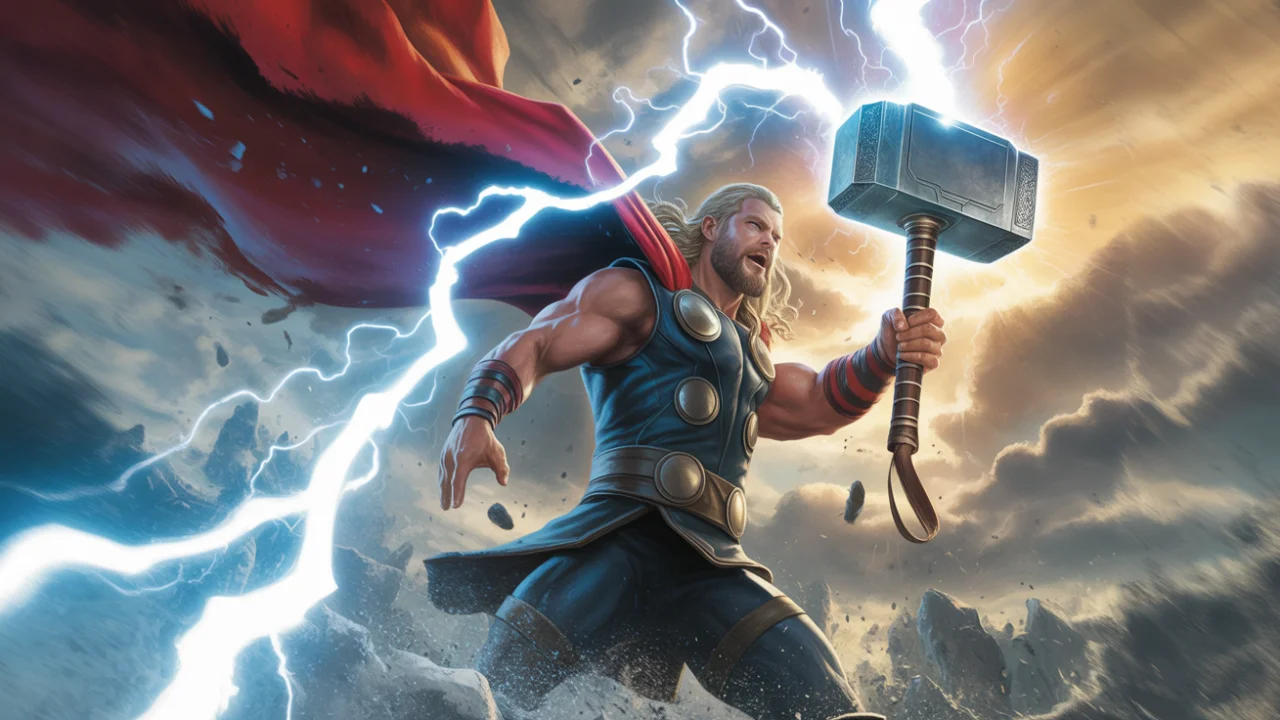
I'll guide you through everything about Thor's origins in comics and Norse mythology. I'll show how myths and comics connect, reveal the character's first appearances and evolution, explain Mjölnir's powers and what they actually do, recount moments when his secret identity changed, and share quick facts that will surprise you. I'll point out Easter eggs from Marvel movies and alternate versions seen on screen. Get ready to discover essential secrets that every fan will love.
The origin of Thor in comics and Norse mythology
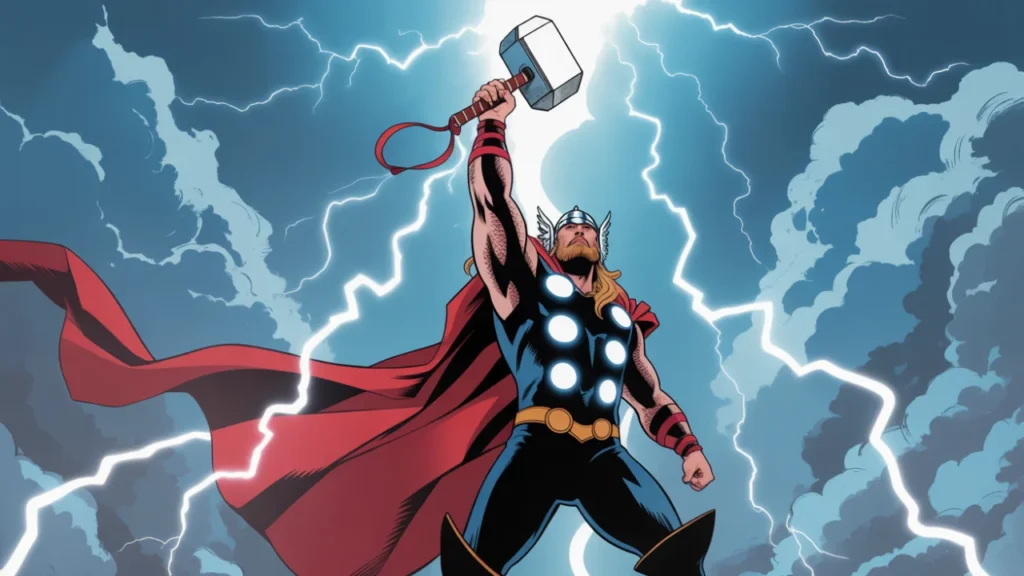
I explore the secrets of Thor from the root: the character is born from two universes — ancient Norse mythology and Marvel comics. In mythology, Thor is the son of Odin, lord of the gods, and is the god of thunder, famous for his hammer Mjölnir, which returns to his hand like a boomerang. In the comics, Stan Lee, Larry Lieber, and Jack Kirby took these elements and transformed them into a superhero, adding a human alter ego and adventure plots that have pleased generations. I like to think of it as a recipe: ancestral ingredients with a modern touch to create something everyone recognizes.
The beauty lies in the differences. The mythological version presents a more gruff, quarrelsome Thor, deeply connected to the creation myths and Ragnarok; Marvel softened and humanized this profile. In the comics, he is a hero, prince of Asgard, sometimes arrogant, sometimes vulnerable—this mix of greatness and human flaws is what makes the character work on screen and in the pages. I see the hammer as a symbol—power that tests character.
I also observe how the story changes over time. Comic book artists and screenwriters reinterpret the origin, change details like Loki's role or Don Blake's presence, and adapt Thor to each era. With each new phase, the character gains layers; sometimes he returns to pure folklore, sometimes he becomes a modern myth on screen. Following these turns is like flipping through a family album full of different photos.
How do Norse mythology and Thor connect?
In Norse mythology, Thor is the defender of humans and gods against giants and chaotic forces. He uses Mjölnir to protect order, controls thunder, and traverses the sky in a chariot pulled by goats. These elements gave the comic book creators rich material to work with—the hammer, the storm, and the goats became action scenes that leap off the page.
The comic books retained these symbols, but changed the context: Thor became a superhero with personal conflicts, complex relationships with Odin and Loki, and villains who blend technology and mythology. This creates a bridge between the ancient Norse faith and pop culture.
First appearances and evolution in comics
Thor first appeared in comic books in Journey into Mystery ##83 (1962). The creative team brought the myth into the superhero era: there was Dr. Donald Blake as a disguise, and the hammer served as a trigger for the transformation—a device that gave the audience easy entry into the divine universe.
Over time, the character has evolved considerably. Screenplays like those by Walt Simonson in the 1980s reimagined Thor in an epic way, adding grand narrative and striking visuals. Decades later, modern screenplays have delved deeper into psychology and family ties, while cinema has popularized the figure globally.
Quick facts about Thor's origin.
- He comes from Norse mythology; he is the son of Odin and wields Mjölnir, forged by dwarves.
- In comics, it debuted in Journey into Mystery #83 (1962), created by Stan Lee, Larry Lieber, and Jack Kirby.
- He originally had the alter ego Dr. Donald Blake; this identity was eliminated or modified in later story arcs.
- Runs like Walt Simonson's are a benchmark; today they circulate among pages, films, and popular legends.
Mjölnir's powers and Thor's secret identity.
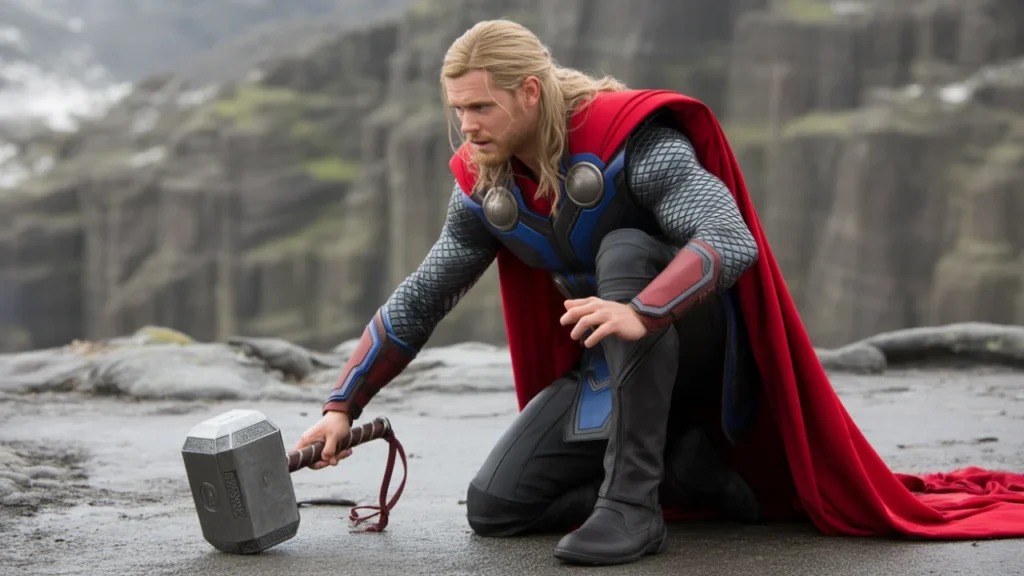
I've always been fascinated by Thor's secrets ever since I first saw the hammer gleaming on screen. For me, Mjölnir is more than an accessory—it's a character. It decides who can act as a hero, brings lightning, allows flight, and even opens holes between places. In each use of the hammer, something about Thor is revealed: strength, responsibility, and sometimes, loss.
Thor's identity is unlike that of other heroes who hide behind a false name. In the old comics, there was Donald Blake; in the films, Thor lives openly as a prince and later a king. These variations create powerful scenes: tested friendship, wounded love, and choices that transform the character. This blend of divinity and humanity keeps the story alive.
I also see Mjölnir as a mirror: sometimes it strengthens, at other times it forces one to learn another form of courage — a drum that marks the rhythm of his life.
What the powers of Mjölnir actually do
Mjölnir possesses several concrete abilities: it summons and controls thunder and lightning, allows Thor to fly by spinning it, opens portals, and can project energy blasts. In the movies, we see the hammer return to its owner's hand like a faithful boomerang; in the comics, it also gains mystical properties that alter reality in certain stories.
There are important rules: Odin's enchantment defines who is worthy. It's not just physical strength; it's character, sacrifice, and loyalty. Characters without physical strength but with great courage have managed to interact with the hammer—a famous example: Vision lifting Mjölnir in the MCU.
Moments when Thor's secret identity changed.
Thor's identity has undergone remarkable transformations. In the 1960s, Marvel created Donald Blake as a human disguise; later, the disguise was abandoned, showing that the divine can choose humility. When Jane Foster wielded Mjölnir and became the mighty Thor, many fans saw the world turn upside down. In the films, Thor transitions from an impulsive hero to a thoughtful king—identity is movement.
Verified facts about Mjölnir and identity.
- Mjölnir was forged from Uru (a fictional metal in the comics) and received Odin's enchantment that only allows the worthy to lift it.
- Stan Lee and Jack Kirby created several concepts that are now a central part of Thor's iconography.
- In film, the hammer serves as a moral test and dramatic tool; scenes like Vision lifting Mjölnir or Jane being Thor were well-crafted and impactful.
Thor's secrets in Marvel movies
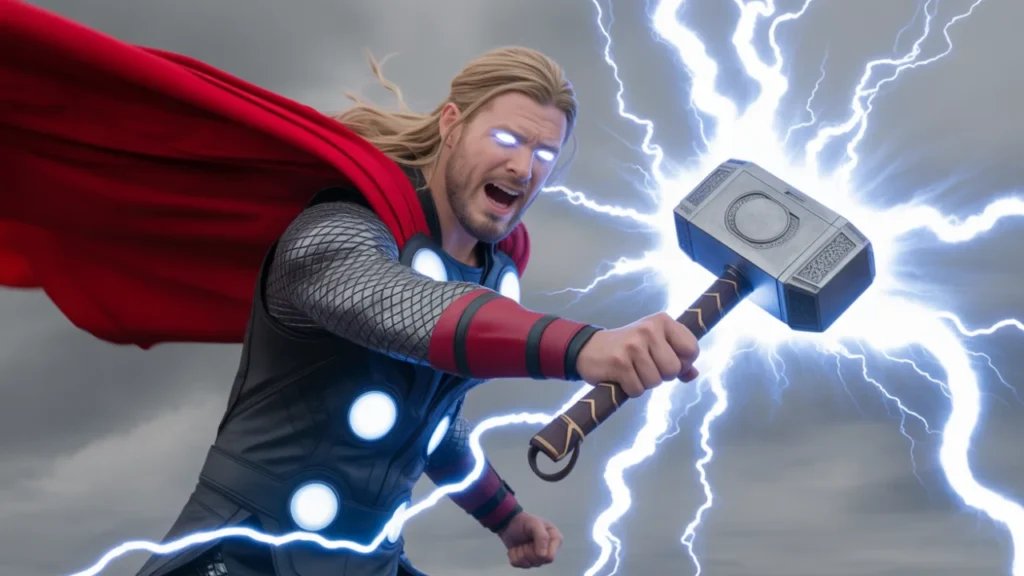
I enjoy hunting for Thor's secrets when I watch the movies. Some are obvious, like direct references to the comics; others are hidden in short scenes, paintings in Odin's hall, or props that connect each film to the rest of the Marvel universe.
One of Thor's most fascinating secrets is its blend of Norse mythology with modern humor: ancient runes and myths alongside puns create layers of interpretation—you can laugh and, at the same time, feel the dramatic weight. The films also plant connections for the future in post-credits scenes and subtle details.
Easter eggs from the Thor movies that I love.
- Cameos and connections to the comics, such as Thanos' appearance in the post-credits scene of the first Thor movie.
- Stan Lee makes cameo appearances in moments that will wink at those familiar with the comics.
- Names, costumes, and props that pay homage to classic characters—these are little treasures for those who pay attention.
Alternative versions of Thor and family relationships shown on screen.
The screen plays with different versions of Thor: sometimes the classic hero, sometimes bankrupt, depressed, or full of humor—showing that the character can be many things. Family relationships (Odin, Frigga, Loki, Hela) pull the story into deep emotional conflicts. Loki's adoption and the rivalry with Hela add emotional layers that make the saga more human.
Interesting facts about Thor in the Marvel movies.
- Improvised scenes by the cast that became an emotional turning point;
- Costume details inspired by classic comic books;
- References to real myths mixed with modern adaptations.
extra curiosities
One little-known secret of Thor is how different media reinterpret the hammer's allure to serve the story's theme: in darker arcs, Mjölnir can reflect guilt or redemption; in humorous stories, it becomes the butt of jokes or gaffes. This symbolic use of the hammer is one of Thor's richest secrets for those who study narrative.
Conclusion
Thor is, above all, an encounter—between Norse mythology and comic books. Mjölnir is not just a hammer; it's a test of character, a drum that marks the rhythm of the story. What shines is the blend of grandeur and humanity: gods who err, heroes who reinvent themselves, identities that change like seasons. Whether in Marvel films, classic comics, or alternate versions, themes like sacrifice, pride, and redemption appear with new voices.
I showed Easter eggs, identity changes (like Jane Foster), and family relationships (Odin and Loki) because these are threads that connect myth and pop culture. Each detail becomes a gateway to another story.